
Diving with manta rays
Where and when to meet these gentle giants.
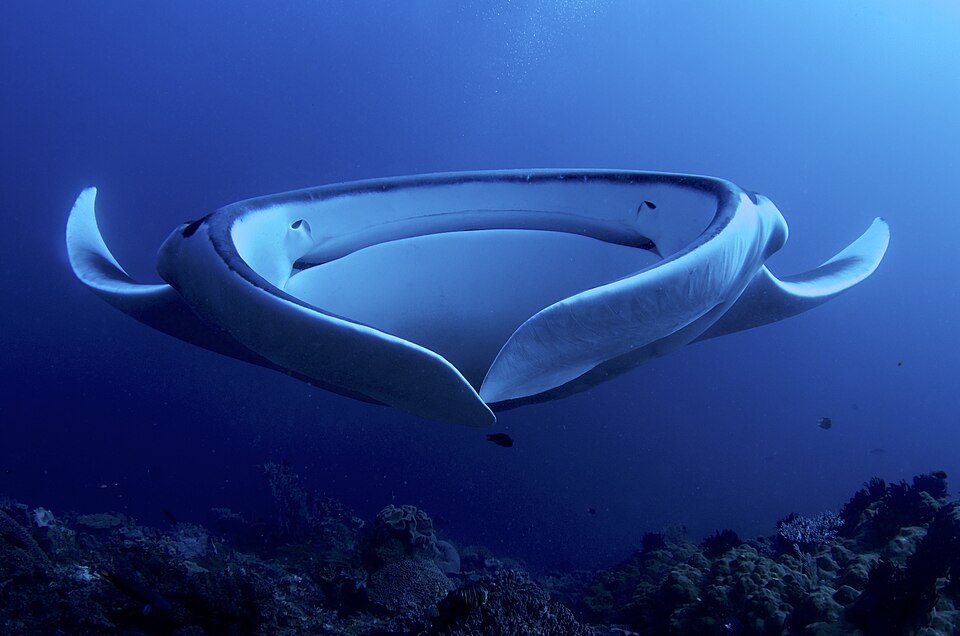
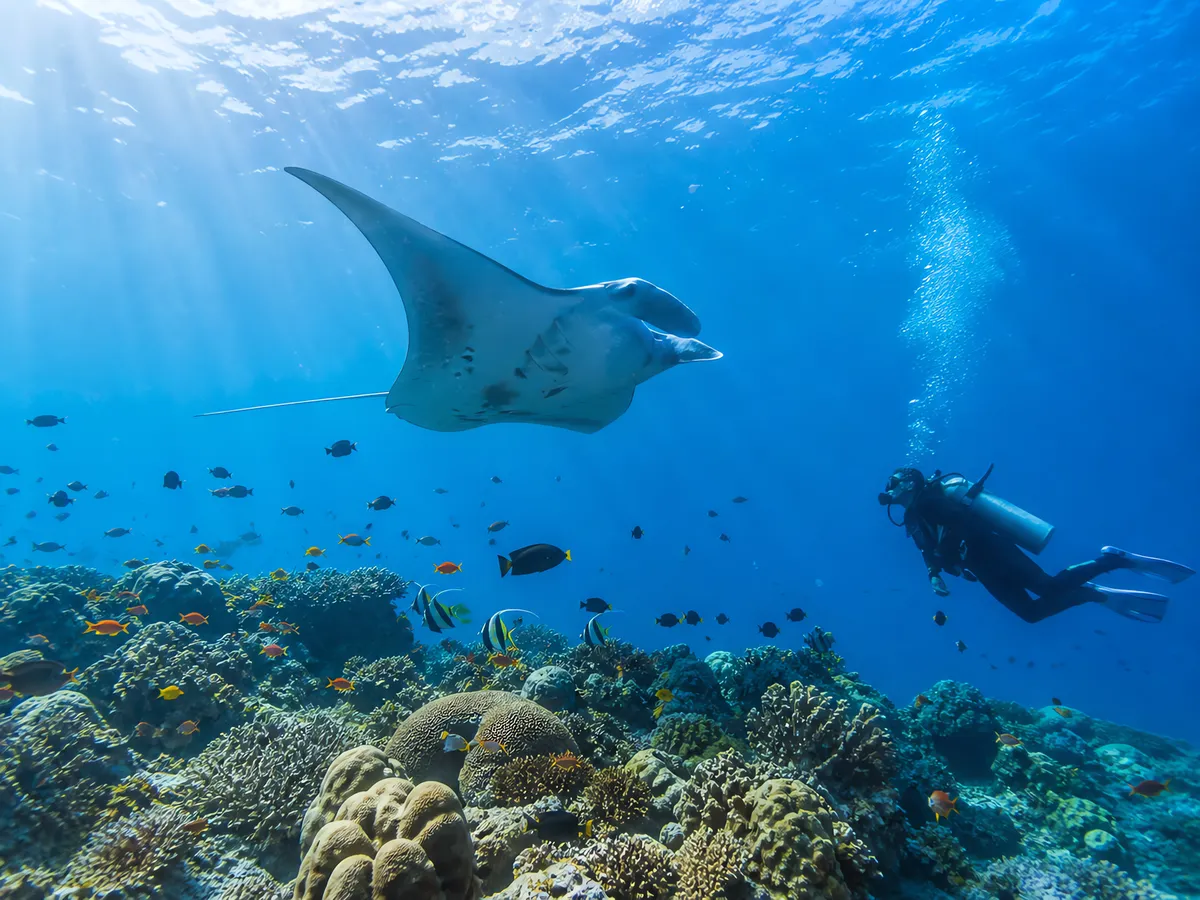
Manta rays are among the most graceful animals in the ocean. On a good dive they glide through the blue with wings spanning several metres, feeding on plankton and visiting cleaning stations where small fish pick parasites off their skin.
These are encounters that reward patience and calm. Mantas are large but completely harmless to divers — they feed on plankton, not people — and they will often loop back to circle a diver who stays still and neutral.
The list below collects the manta-ray sites in our database, ranked by overall score. The key to a good encounter is usually timing: mantas follow plankton and currents, so operators time dives to the tide and season.
How mantas behave
Reef mantas patrol coral-ribbon reefs and cleaning stations; giant oceanic mantas range across open water. Both gather where food is pushed together by currents. During a dive, a manta may pass once — or stay and loop for many minutes if you hold still and don't chase.
Where and when
Manta sightings trace seasonal aggregations. Some sites are reliable year-round, others peak in a specific season when the plankton bloom arrives. Check each site's best season before you book; the "best season" field on every site page tells you when the area is at its most reliable.
Top sites for this
12 recommended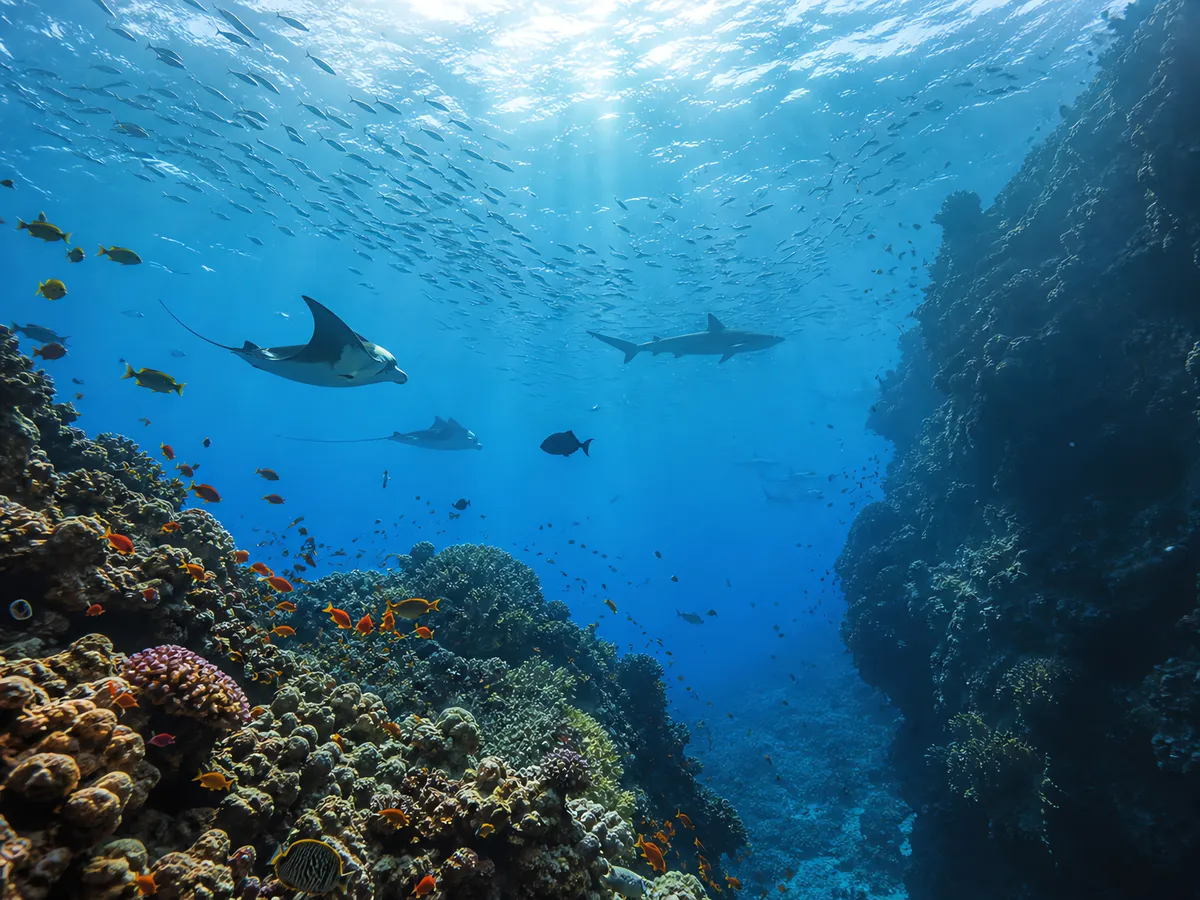
Elphinstone Reef
Wall-and-reef diving with visibility up to 30 m, 4 standout species, liveaboard access, challenging currents — a strong choice for experienced divers.
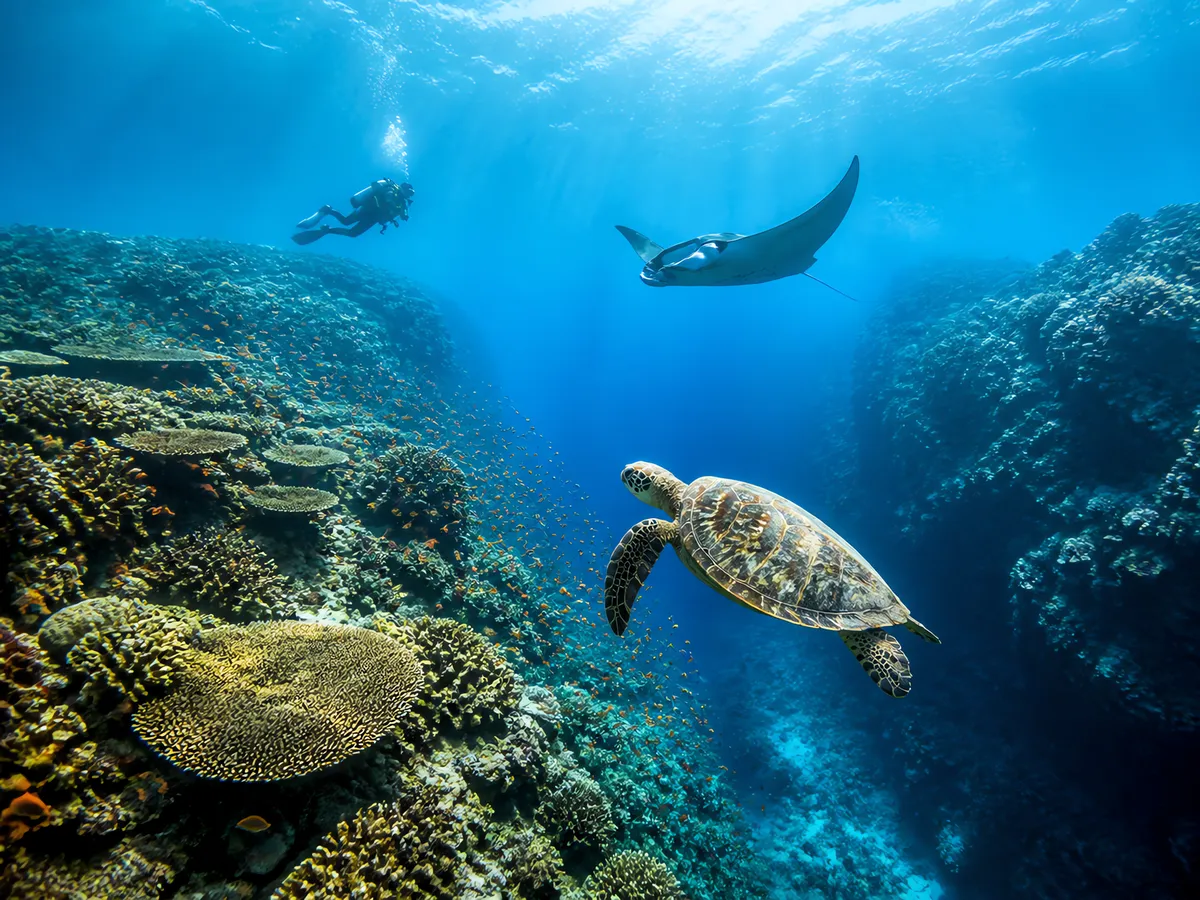
Kerama Islands
Wall-and-reef diving with visibility up to 35 m — a great fit for most divers.
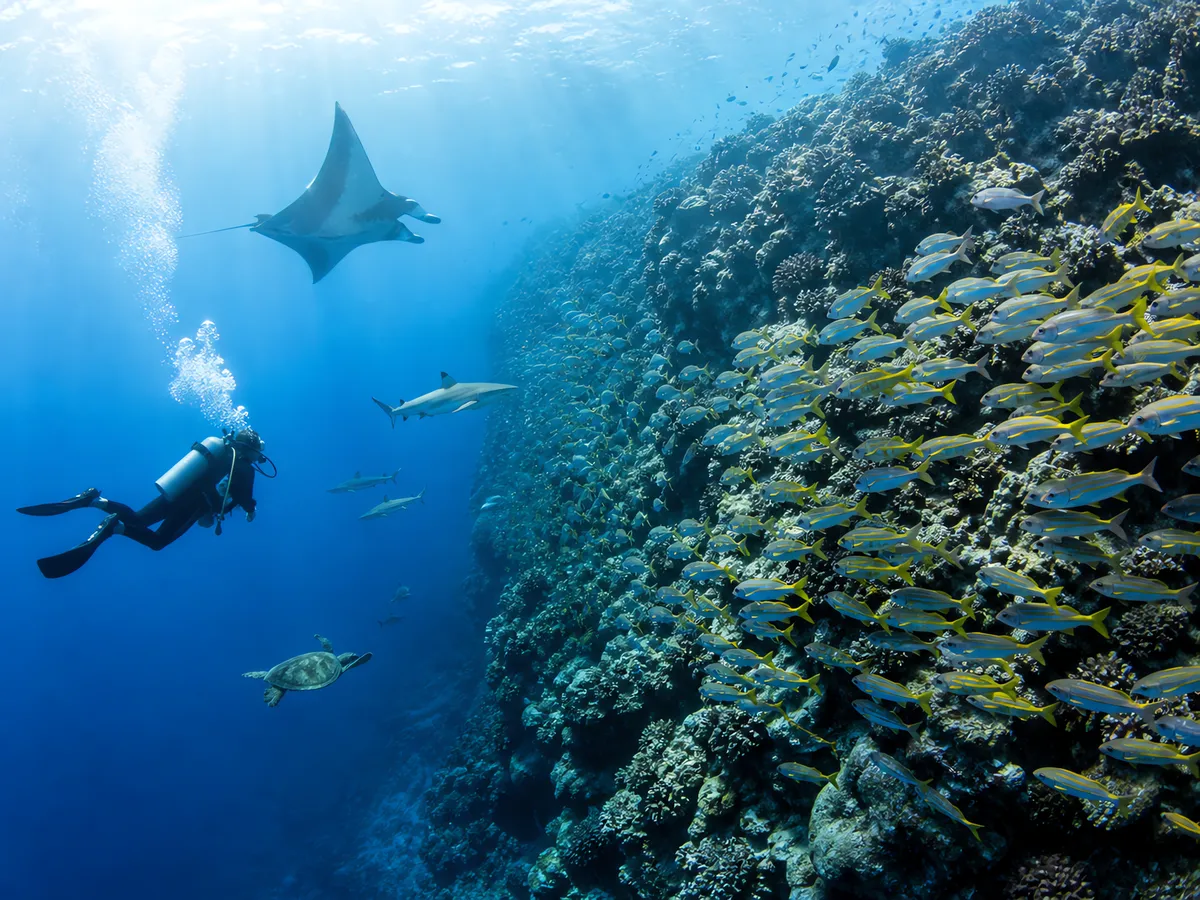
Blue Corner
Wall-and-reef diving with visibility up to 30 m, 4 standout species, challenging currents — a strong choice for experienced divers.
Nusa Lembongan
Drift diving with 4 standout species — ideal for newcomers.

Raja Ampat
Wall-and-reef diving with visibility up to 25 m, 4 standout species, liveaboard access — a great fit for most divers.

Komodo National Park
Wall-and-reef diving with visibility up to 25 m, 4 standout species, liveaboard access, challenging currents — a strong choice for experienced divers.

Ishigaki Island
Drift diving with visibility up to 25 m — a great fit for most divers.

Flower Garden Banks
Reef diving with visibility up to 30 m, 4 standout species, liveaboard access — a strong choice for experienced divers.

Tubbataha Reefs Natural Park
Wall-and-reef diving with visibility up to 30 m, 4 standout species, liveaboard access, challenging currents — a strong choice for experienced divers.

Malapascua Island
Wall-and-reef diving with a well-rounded site — a strong choice for experienced divers.

Ari Atoll
Wall-and-reef diving with visibility up to 25 m, liveaboard access, challenging currents — a strong choice for experienced divers.

Osprey Reef
Wall-and-reef diving with visibility up to 30 m, 4 standout species, liveaboard access, challenging currents — a strong choice for experienced divers.
Frequently asked
When are manta rays most likely to be seen?
It depends on the site — many manta spots follow a seasonal plankton bloom, others are year-round. Check the best-season field on the site page before you plan a trip.
Do manta rays ever sting?
No. Mantas have no stinging barb; their only defence is size and speed. They are entirely harmless to divers.
Can a beginner dive with manta rays?
Often yes. Many manta sites are shallow reef dives well within Open Water limits, though some deeper blue-water encounters suit a more experienced diver.