
Cave and cavern diving: what to expect
Overhead environments demand training and discipline.
Cave diving looks spectacular, but it sits at the far end of the scuba spectrum. Unlike an open-water reef dive, there is no direct line to the surface — the exit might be metres behind a rock ceiling, and the margin for error shrinks dramatically.
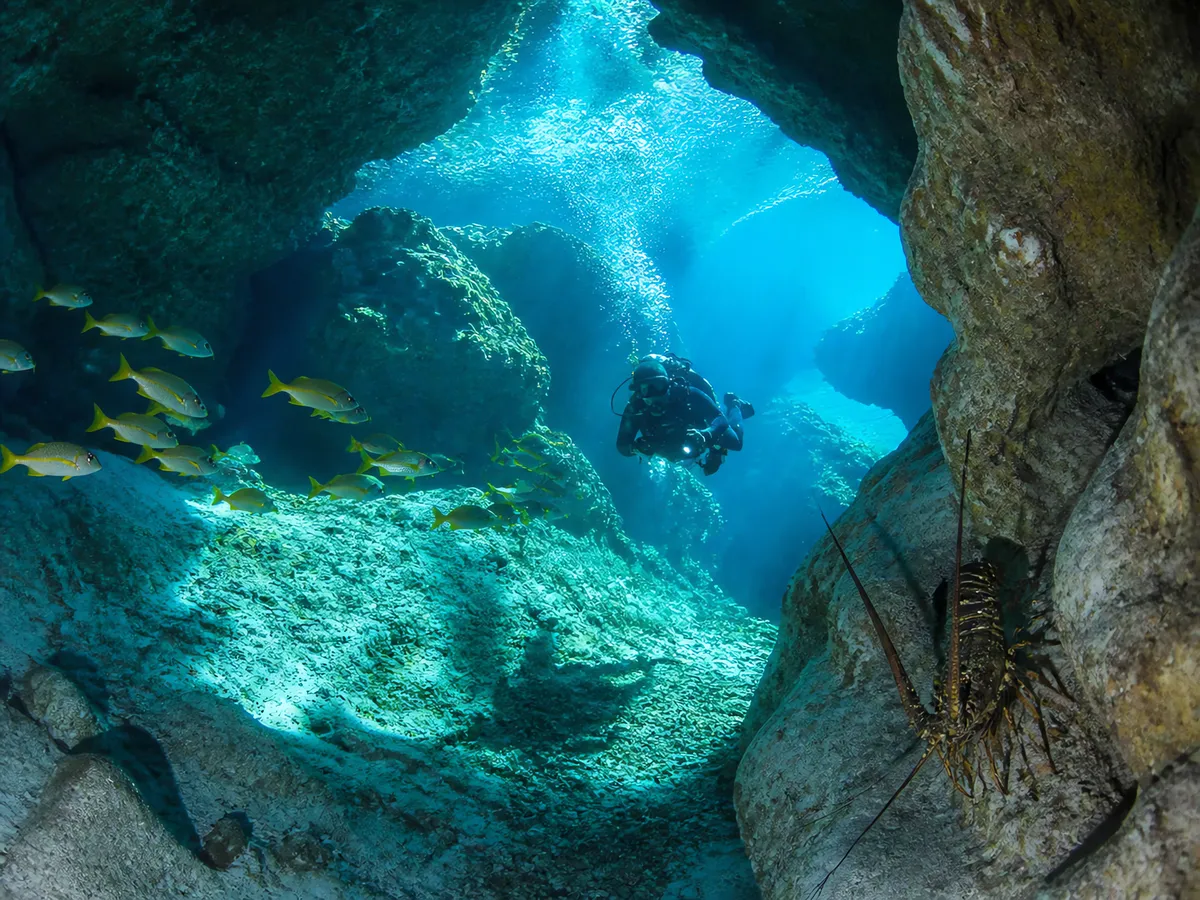
The key distinction is between a cavern and a cave. A cavern is an overhead environment that still has natural light and a clear exit line; a cave takes you past the point where daylight ends, into true darkness.
Our database includes cave, cavern and blue-hole sites, which we list below ranked by overall score. Treat any overhead site as advanced, and never enter a true cave without proper training.
Cavern vs cave
A cavern dive keeps daylight and a visible exit within reach, which is why many operators offer it to advanced Open Water divers under close supervision. A cave dive goes beyond the light, requiring full cave certification, a guide, and specialist equipment — including redundant gas and a proper line system.
What training you need
Cave diving is a progression: cavern, then intro-to-cave, then full cave, usually via a recognised agency. Each level adds the skills to handle loss of visibility, a failed light, or a silt-out. The golden rules — the rule of thirds, continuous line, and a competent buddy — are drilled from the first course.
The risks, honestly
Overhead diving failure is almost never about the cave itself; it's about discipline. Running low on gas, losing the line, or triggering a silt-out in zero-visibility water is what turns a beautiful dive into an emergency. That's why training and a strict system matter far more than bravery.
Top sites for this
10 recommended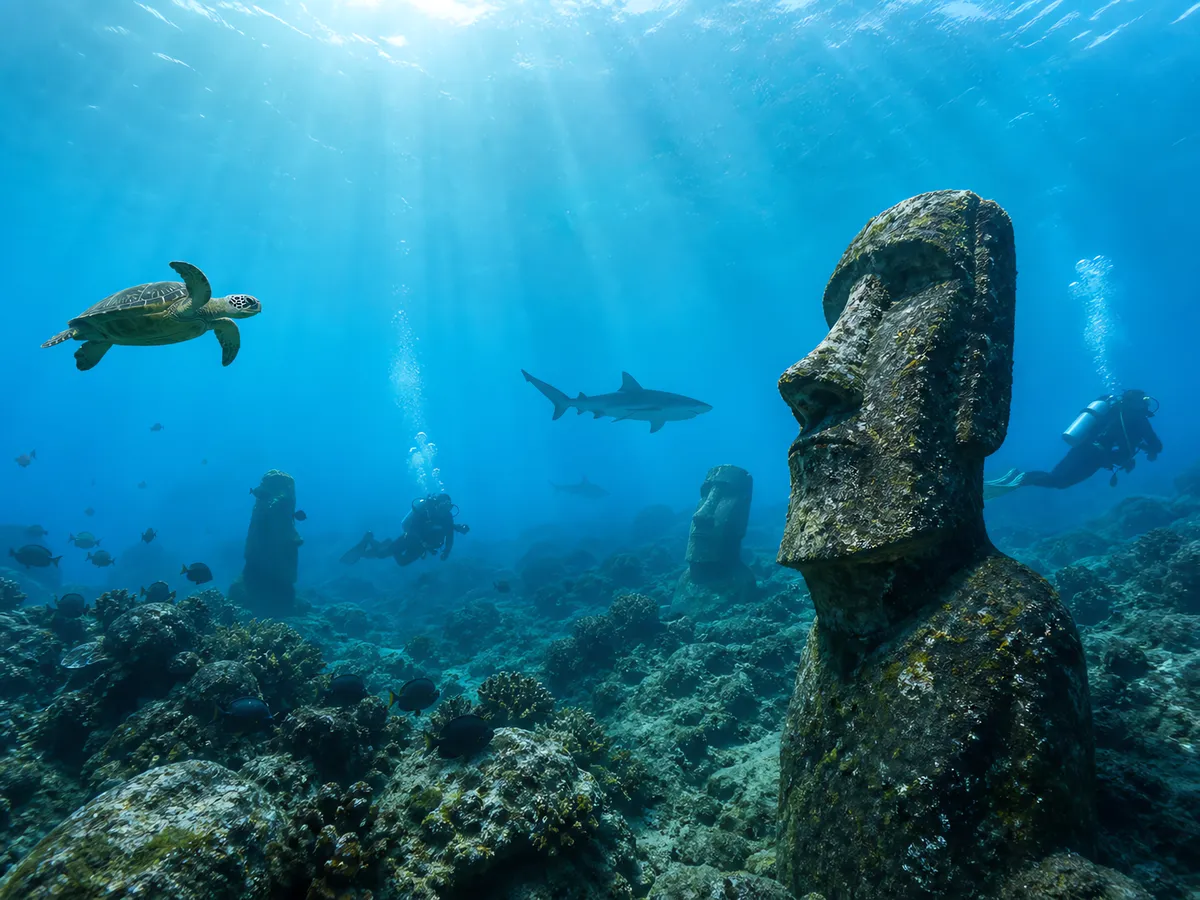
Easter Island (Rapa Nui)
Cave diving with visibility up to 30 m, 4 standout species — a strong choice for experienced divers.

Kas
Cave diving with a well-rounded site — ideal for newcomers.

El Pit Cenote
Cave diving with visibility up to 30 m, 4 standout species — a strong choice for experienced divers.

Gozo Blue Hole
Blue-hole diving with visibility up to 25 m — a great fit for most divers.

Dahab Blue Hole
Blue-hole diving with visibility up to 25 m — a strong choice for experienced divers.
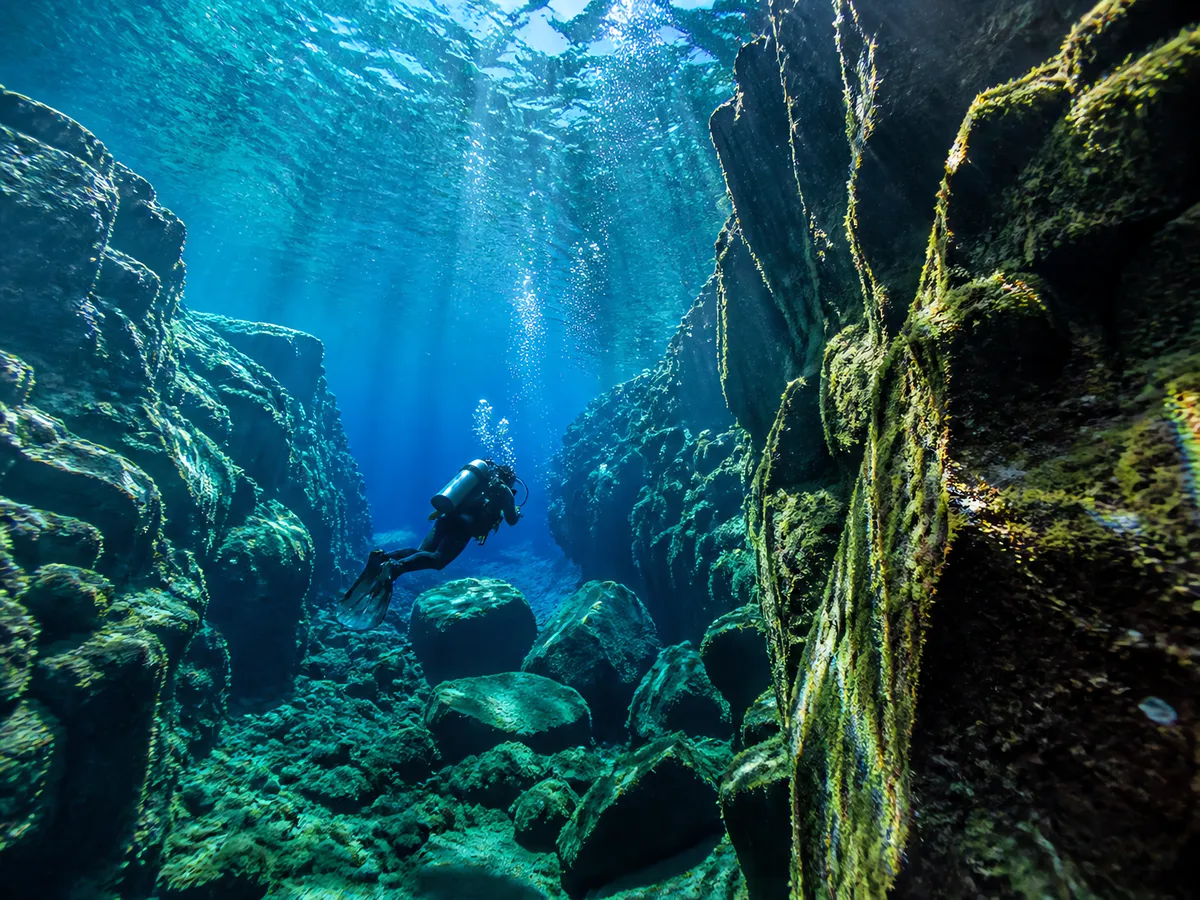
Silfra Fissure
Drift diving with visibility up to 100 m — a great fit for most divers.

Santorini
Cave diving with a well-rounded site — a great fit for most divers.
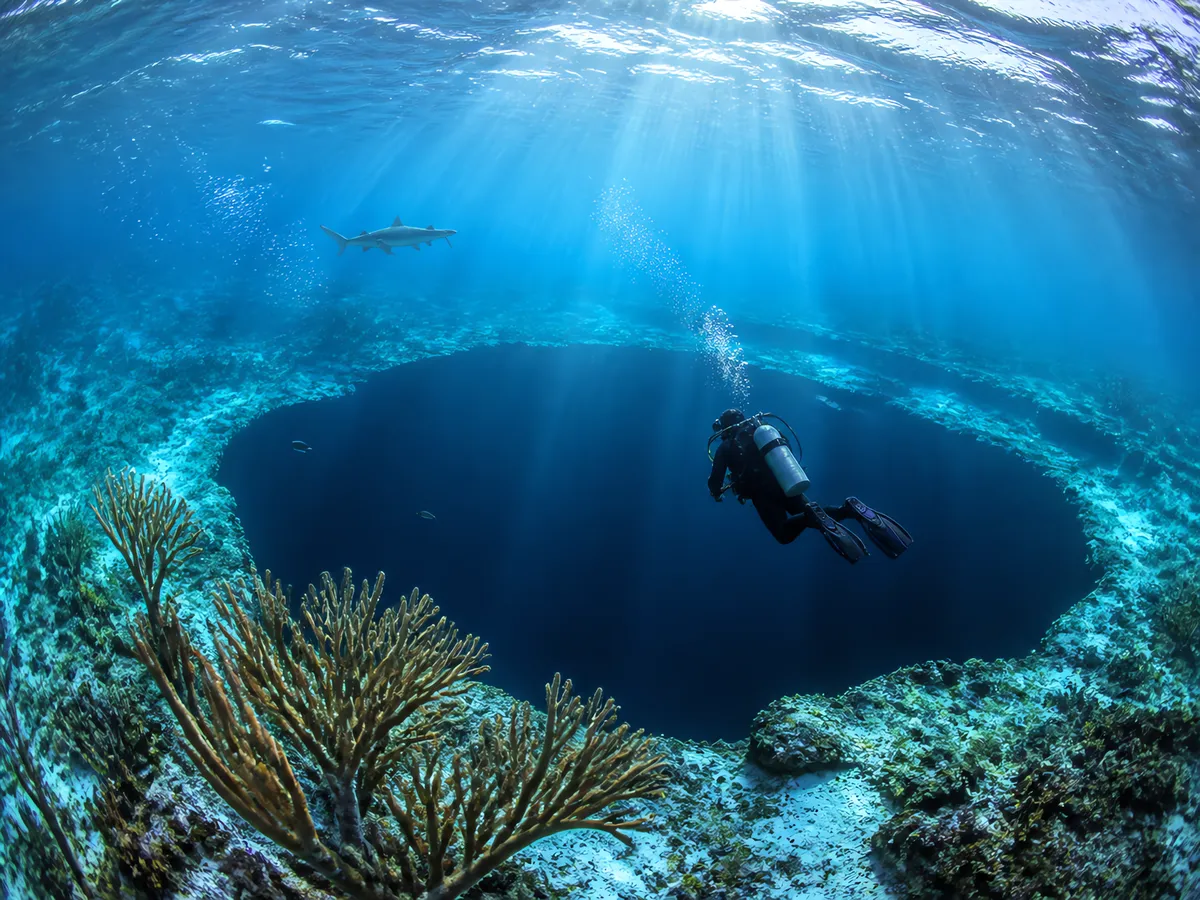
Great Blue Hole
Blue-hole diving with visibility up to 25 m — a strong choice for experienced divers.
Exuma Blue Holes
Blue-hole diving with a well-rounded site — a strong choice for experienced divers.

Jellyfish Lake
Diving with a well-rounded site — ideal for newcomers.
Frequently asked
Do I need a cave certification?
For an actual cave, yes — a certified cave course with a qualified guide. For a supervised cavern dive within daylight, some operators accept advanced Open Water divers.
Is cavern diving different from cave diving?
Yes. A cavern keeps natural light and a clear exit line in view; a cave takes you past daylight into true darkness with a much narrower margin for error.
How deep do cave dives go?
It varies widely by system. Many caves stay relatively shallow, but the defining risk is overhead geometry rather than depth alone.